From the category archives:
The Secret
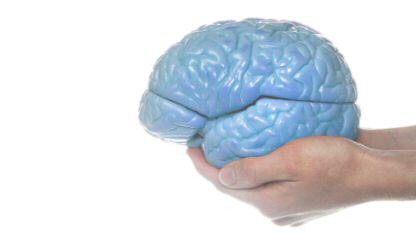
Hit and Miss: The Brain’s Bias
This article was originally planned as part of the debunking series, “Why The Secret Seems To Work”. As I wrote, I decided it was good as a stand alone article. Still, if you’re interested, you’ll find the Secret series linked at the end of this post. Now I’ll shush with my ramblings, and get on with the posting.
__________________________________
The subconscious mind has a lot of interesting tricks up its cerebellum sleeve.
One of them, officially known as “confirmation bias”, plays a big part in our instinctive responses… and it’s also one reason that otherwise rational people tend to believe weird, sometimes irrational things.
So what exactly IS this ‘confirmation bias’?
It’s a fancy-pants $10 phrase that means exactly what you might think: We’re unconsciously biased towards information, experiences and interpretations that confirm our expectations and beliefs.
Simply put? Our brains are wired to count “hits” as more important than “misses.” When it comes to our desires, beliefs and expectations, positives are more important to us than negatives.
While the bias often leads us to cling to false conclusions, there’s actually a good reason our brains are set up that way.
__________________________________
Here’s how it works:
Let’s say we were lost in the wilderness, searching for food.
By chance, we stumble across a blackberry bush, with a handful of luscious ripe berries. We eat them, then look for more bushes. The next five bushes we find don’t have any berries on them, but the sixth bush we check has enough fruit to feed us for two days.
 In this situation, our survival depends on our giving more importance to the time we found the berries, than the times that we came up empty handed.
Finding the berries in the first bush sets up the expectation: bush= food. Our mind disregards the five “miss” bushes, and we continue looking. Eventually we find another bush with berries, we’re rewarded for our belief in berries on bushes, and the whole thing reinforces the expectation of bush=food.
It’s a good tactic.
If our brain had assigned as much importance to the misses as the hits, we’d probably have stopped looking for bushes, gone back to random hunting for food under rocks, and we might have starved. Instead, the biased-brain strategy pays off, and we’re rewarded with more blackberries.
Cool, huh?
__________________________________
Why aren’t we more aware of it?
This confirmation bias is part of what I call the brain’s “autopilot” function; processing that goes on well below the surface of our conscious awareness or attention. The auto-pilot brain helps us cope with survival on a very basic level, a level that doesn’t require intellect or thought or awareness. In fact, it may be built to by-pass our intellectual process, so we cant think ourselves out of survival.
Being the thinking, reasoning, intellectual creatures that we are (And proud of it!) we mostly assume that any and all of our thoughts are the results of our intellectual reasoning. We don’t pay much attention to how often the auto-pilot is on, or how strongly it influences us in our day to day decision making process… but it does influence us.
No matter how smart we are… when we look at facts related to our expectations and desires, we pay more attention to facts, experience and information that support the result we want or expect. When it works, it works well.. but when it doesn’t.. we wind up very convinced in things that may be very wrong.
__________________________________
Our hit-over-miss bias can be used against us
Fraudulent psychics and spiritual con-artists are well aware of our preference for hits over misses. They know that all they need is for one chance prediction to come true, one accurate guess, and we’ll tend to dismiss all of the false and inaccurate things they’ve said.
We don’t need anyone intentionally fooling us, either… our bias towards the positive hits can cause us to leap to some startling conclusions, including that even the most simplistic astrology is accurate, Big Foot and ancient astronauts really exist, and that old Aunt Eunice can really give you the evil eye, and muck up your whole day.
It’s part of why mystical believers can be so devout, even in the face of scientific studies disproving their beliefs, and it’s also why skeptics can be so stubbornly skeptical, able to blindly dismiss any evidence that might support a mystical explanation — because their confirmation bias leads them to do exactly that.
Mind you, just because our confirmation bias is in play doesn’t mean we’re wrong about our beliefs or expectations. Blackberries DO grow on bushes, after all, and Aunt Eunice IS eerily frightening… but our bias towards the hits makes our instinctive belief an unreliable standard.
__________________________________
 Ok, but… what does this have to do with The Secret?
The Secret states that that *whatever* we hold in our mind, we bring into reality.
Not just things we see as goals, or desires, or intent, not even things we dwell on… but any old thing that we think about, we mystically manifest.
That’s where our hit-over-miss bias comes into play.
Statistically speaking, some of the things we think of *will* happen, even if we take no action towards them at all. Every once in a long while, someone will randomly think of a giant tie-dyed elephant just exactly the moment before a circus parade is turns down the street, complete with a rainbow-clad elephant named Hippie.
Most of the time, of course, we could spend a full week meditating on a tie-dyed elephant, and it would never manifest; the same goes for any number of other unlikely scenarios.
But all if that ONE unlikely elephant appears, we forget all about the other things we thought of that *didn’t* happen -winning the lottery, the tea-party with Elton John, the exploding Tasmanian duck.
Our auto-pilot brain notes the elephant as a hit, ignores the misses, and .. tada.. we must have magically manifested the elephant.
So, that’s how our confirmation bias contributes to the apparent success of The Secret — If you count the times it works, ignore the times it doesn’t, The Law of Attraction winds up with a very skewed 100% success rate.
__________________________________
MindTweak: If we are to learn to improve the quality of the decisions we make, we need to accept the mysterious nature of our snap judgments. - Malcolm Gladwell, in Blink
__________________________________
- The Secret: A Rant Against Self-Help Pseudo-Science
- Why The Secret Seems To Work: The Serial Debunking Begins!
- 10 Rational Reasons The Secret *Seems* To Work
- Hit and Miss: The Brain’s Bias
{ 4 comments }
10 Rational Reasons The Secret *Seems* To Work
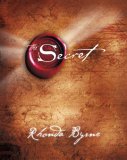
Disclaimer: I’m not saying you can’t get positive, successful results by following the ideas in The Secret, because you can. I’m *am* saying that the reasoning giving in the film is not accurate, and that the underlying philosophy has the potential to be harmful. This series will look into what works, what doesn’t, and the pros and cons of sensational systems like The Secret.
So with that out of the way, here’s a quick and dirty rundown of the less-than-secret methods of The Secret, minus the mystical-woo.
The Secret:
- Asks you to define your goals and dreams.
- Requires that you give positive attention to your goals
- Suggests good visualization techniques
- Plants the subconscious motivation that “your dreams have already happened”
- Sidesteps your fears and negative defenses.
- Changes your attitude and beliefs about your goals, and therefore your actions, both in large and subtle ways.
- Encourages a positive attitude, which in turn encourages others to offer you help, encouragement and new opportunities.
- Makes you more aware of new opportunities related to your dream, and makes you more likely to act on them.
- Makes you more likely to see synchronicities and coincidences as significant, reinforcing your progress towards your goals.
- Exploits the “confirmation bias”… your mind will give more weight to your successes with The Secret, than to failures. This helps you feel successful.
These methods have been used in countless combinations in countless spiritual, self-help, and goal-setting systems. Wrapped up in an attractive, simple-to-grasp concept like “The Secret” they’re especially effective.
So why do I object?
Because these techniques *are* solid and effective on their own; they don’t require all the pseudo-scientific, pseudo-mystical woo-woo marketing in order to work.
Wrapping these methods up in false claims of science and conspiracy does a disservice to the consumers - a disservice which goes far beyond the 19.99 price tag of a book or DVD. People are changing their belief systems, based not on the real techniques, but based on the false claims and bad philosophy.
MindTWEAK: Safe upon solid rock the ugly houses stand: Come and see my shining palace built upon the sand!
-Edna St Vincent Millay
_____________________________________
- The Secret: A Rant Against Self-Help Pseudo-Science
- Why The Secret Seems To Work: The Serial Debunking Begins!
- 10 Rational Reasons The Secret *Seems* To Work
- Hit and Miss: The Brain’s Bias
{ 4 comments }
Why The Secret Seems To Work: The Serial Debunking Begins!
“This season’s run-away hit is called The Secret. It’s a book, it’s a DVD, it’s a down-loadable video file. It slices, it dices, it steams the wrinkles out of your laundry while you sleep… and it manages to misrepresent science, history, and philosophy in the process. What isn’t there to love?” - Me, dripping sarcasm.
So. If The Secret is bunk and bruhaha, why do so many people swear it works?
Can smart marketing, pretty parchment and hints of an ancient conspiracy not only convince people to buy a product, but get them so invested that they believe anything they’re told about it?
Well.. yes. But more on that another time.
Today’s topic is much more positive.
Truth is… (and I hate to admit this) once you scrape the moldy psuedo-science and the spiritual soft-spots off of The Secret …. there really are some sound aspects that are likely to bear fruit.
For those who may not know, The Secret is all about The Law of Attraction  (which isn’t a law, but.. whatever.) The idea is that whatever you hold in your mind you draw to you.
If you think friendly happy thoughts about elephants, you draw friendly happy elephants to you. Elephants with smiles and balloons for the kiddies.
But if you think fearful, negative thoughts about elephants, a herd of rogue bulls with tusks the size of skyscrapers will manifest in your front yard and raze your house in a fearful, negative stampede.
Simple, eh? Too simple, and rather absurd, but that’s the deal in a peanut shell. (Sorry, the elephants ate the actual peanuts.)
So why do so many people swear by it, in spite of the absurdity and elephants?
Because The Secret uses some pretty sophisticated mind tricks and tweaks. Yes, some of the tactics are in the marketing, and aimed at getting you to buy the DVD/book and support materials. Other tricks are about getting you to suspend your disbelief, to buy not just the product, but the idea, so that you’ll spread the word.
These tricks benefit the producer, not the consumer.
But other techniques used *do* have practical value for the end user. The Secret encourages and teaches positive thinking, skims around defensive pessimism, teaches abstract goal-setting, letting go of attachments and fears, techniques for programming your subconscious actions, as  well as some pretty solid visualization techniques.
That’s useful stuff, and worth more than peanuts (though less than elephants).
So I’ve decided I’ll debunk The Secret by explaining how it *actually* works.
Cool, huh?
Don’t worry, the series will also contain the usual snips and snipes about pseudo-science and marketing ploys (ancient parchment, baby, ancient parchment!) and whatever bits of humor strike my fancy.
The first segment should be up Monday. Meanwhile, you might want to go back and re-read The Secret: A Rant Against Self Help Pseudo Science, just so you remember I am not endorsing the thing. I’ve simply become one with the Borg, and succumbed to my Google search results. That single post receives more hits on any given day than the combined hits on all the other articles.
Who knew?
_____________________________________
MindTWEAK:
That a lie which is half a truth is ever the blackest of lies;
That a lie which is all a lie may be met and fought with outright;
But a lie which is part a truth is a harder matter to fight.
- Alfred Lord Tennyson, The Grandmother
_____________________________________
- The Secret: A Rant Against Self-Help Pseudo-Science
- Why The Secret Seems To Work: The Serial Debunking Begins!
- 10 Rational Reasons The Secret *Seems* To Work
- Hit and Miss: The Brain’s Bias
{ 0 comments }
The Secret: A Rant Against Self-Help Pseudo-Science
Every few years, a new book or movie captures the New Age Heart of the World (or at least middle class America). These bestsellers promise of everything from enlightenment and powers of levitation to riches and world peace, and are hawked with all the sincerity, appeal and effectiveness of a celebrity diet fad.
This season’s run-away hit is called The Secret. It’s a book, it’s a DVD, it’s a down-loadable video file. It slices, it dices, it steams the wrinkles out of your laundry while you sleep.
It also manages to misrepresent science, history, and philosophy. It belittles the hard work and exceptional achievements of individuals like Einstein, Shakespeare and da Vinci (all of whom are pictured in the introduction of the DVD, and are presumed successful because they knew The Secret) Ito promotes a philosophy of narcissism which blames victims for their own circumstances. All of this for the purchase price of 19.95 (or just $4.95 pay per view, online)
But never mind all that… quit focusing on the negatives! Because that is, in fact, the big Secret: Think Positive. That’s it. If you learn The Secret you can get rich, and healthy, successful, popular, famous and oh yeah, did we mention RICH? (and did we mention 4.95, pay per view?)
The Secret isolates the popular notion of positive-visualization, cranks it into hyperdrive, and applies it to to the Self and personal desire. Then it slaps on a label of The Law of Attraction, and pretends that the whole thing is a revelation backed by both modern science and thousands of years of wisdom.
The oogity factor is unbelievable here. I’d really fall in love with this, in a B-movie kind of way, it if it weren’t so spiritually, philosophically, historically, scientifically and religiously bankrupt.
- The Secret: A Rant Against Self-Help Pseudo-Science
- Why The Secret Seems To Work: The Serial Debunking Begins!
- 10 Rational Reasons The Secret *Seems* To Work
- Hit and Miss: The Brain’s Bias
{ 19 comments }