
What Is Neuroplasticity?
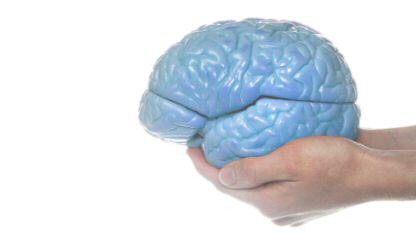
Neuroplasticity is my favorite new buzzword; not so much because of its meaning (which is pretty impressive) but because of the image it invokes: my brain, modeled out of cheap plastic, and distributed via Mattel.
In fact, the Mattel/China toxic paint debacle might explain a lot…. perhaps my neurons have been recalled? I’ll have to check it out. Meanwhile, on with the defining!
Neuroplasticity is the brain’s ability to reorganize itself, generate new cells, new neural pathways, and to change which areas control which functions. It’s become a buzzword for good reason; new understandings of neuroplasticity are turning assumptions about our minds and brains upside down.
One of the basic beliefs about the brain was that once it matured, it was fixed. Neuroplasticity was a function of a developing breain, or so it was assumed. The ability to learn new tasks was believed to be strictly limited, and many of the brains functions (including intelligence, levels of happiness/emotional stability, and mental health were thought largely fixed. Mental decline was considered inevitable with aging, and adult victims of stroke, brain injury and disease were without much hope of improvement.
But modern neuroscience shows that the adult brain remains remarkably flexible. It can reorganize itself after extreme injury and trauma. It can grow. It can form new connections, change wiring, eliminate old wiring.
Perhaps most astounding are discoveries that it adapts not only to external experiences, or to correct injury, but can adapt and change according to our internal thoughts. How we *think*, what we think about, the activities we engage in, the things we value and focus on and practice — they change the physical structure and neural pathways in the brain.
I’m trying to avoid the heavy science here, because I want to get this one point cemented.
Our brains.. my brain, and *your* brain…. are capable of astounding change and growth, for good or ill.
Some of that change is within our ability to control.
It’s worth learning about.
It’s worth learning about, because that process of learning itself changes our brain.
And *that* is neuroplasticity, applied 
_______________________________
MindTWEAK: Turns out, you CAN teach an old dog new tricks!
_______________________________





{ 4 comments… read them below or add one }
Here’s an interesting dimension of neuroplasticity you might find interesting:
http://www.starlarvae.org/Space_Brains_The_Enrichments_of_Weightlessness.html
[...] What is neuroplasticity? Retrieved October 24, 2007 from MindTWEAKS.com http://www.mindtweaks.com/wordpress/?p=484 [...]
[...] On the first day of Brain Fitness My true love gave to me, Brain training For neuro-plasticity! [...]
[...] On the first day of Brain Fitness My true love gave to me, Brain training For neuro-plasticity! [...]