
Pseudo-Science: What it is, What it isn’t, and Why it matters.
A reader recently pointed out that I toss around the term Pseudo-Science quite a bit.
Well, they’re right, I do.
For one thing, it’s fun to say, what with all the hissing SsssSSSsss’s.
For another thing, I admit to finding shameful amounts of amusement in taking apart the ideas - they just make me giggle. (I know. I shouldn’t giggle. But I can’t help it!)
More seriously, there’s a lot of value in examining pseudo-science.
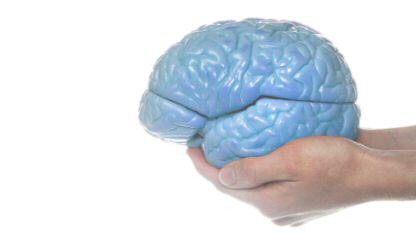
It tests logical skills, encourages taking fresh, creative looks at things, and teaches about the stumbling points in our human thought processes. Debunking pseudo-science is good exercise for the brain.
___________
But what exactly *is* pseudo-science, you ask? I was getting there, I promise!
Pseudo-science refers to any claim, idea, or thought which is presented as scientific…. but isn’t.
Technically, science can mean any body of knowledge - (political science, for example) but most of the time, modern usage of the word conjures up images of laboratories, lab coated scientists and rigorous methods of testing, in search of answers about the world around us.
It’s this second type, the lab-coated type, that pseudo-science imitates.
In order for an idea to be considered “science” (in the lab-coated, rigorously-tested sense of the word) the scientific method must be applied. That method is what makes science distinct from philosophy, intuition, the arts, memorization, and so on - what makes it different from other ways of gaining or testing knowledge.
Say you start out with a question or a problem.
To apply the scientific method, you gather observable information and data about the issue. Next, you come up with a potential answer or solution - an answer which accounts for the data that was gathered. Then that answer has to be tested. (thats where the experiment part comes in). If it works, it has to be tested again, and again, by other people, and it needs to have repeatable, predictable results. The end result isn’t fool proof, but it’s a pretty good way of coming up with ideas, testing knowledge and getting at truth.
___________
Mind you, the scientific method isn’t the *only* way to solve problems, test ideas, or discover truths. Someone might take the same problem, and intuit a perfectly good answer. They might use various creative thinking methods, philosophical methods, ask around among friends, or they might have a solution appear in a dream. Those answers and solutions might work just fine. They might be true, and right, and correct, but they wouldn’t be science, not until/unless they’d been tested with the scientific method.
And not every little bit of knowledge needs to be tested by the scientific method in order to consider it reliable or “true”; I don’t need DNA tests to know my mother is my mother, for example. Though I’m sure it could be proven through applying scientific methodology, if there were serious doubts, I haven’t arrived at the knowledge via science, and it isn’t “scientifically proven” that she’s my mother.
So, if science isn’t the be-all and end all of knowledge, why make the kerfluffle about pseudo-science?
Because pseudo-science doesn’t just take a different approach to knowledge — Pseudo-science is presented *as if* it were science, and scientifically verified. But it isn’t.
And why does that matter?
___________
Because it’s a lie. Worse than that, it’s a lie told to gain and build trust.
Pseudo-scientific claims are mostly made to make an idea or product seem more valid, more believable, more sexy. It’s used to imply that an idea or product has been tested over and over again. It’s used to give sometimes outrageous claims authority, to build the confidence of consumers or believers.
Pseudo-science is a lie, told to make you trust someone or something, to make you believe in it, to make it sexier. It’s dishonest, and it’s manipulative.
It’s troubling enough in the world of advertising, where it’s very common. But it’s downright disturbing when it’s done in the name of spirituality or self improvement or the search for philosophical truth.
Not everyone making pseudo-scientific claims intends to be lying. Some of them just don’t understand science well enough to know why their claims are wrong, others are just in denial - and some justify what they know are lies, “because it gets people to listen to the truth”.
___________
But how valid can a philosophy about the “true nature of the universe” be, if it’s wrapped in a lie? Shouldn’t self-improvement gurus (who often stress the importance of honesty and unflinching self assessment) steer clear of falsehoods and misrepresentation? How true can a spiritual system be, if it relies on pseudo-scientific claims to convince people to follow it? The lie itself diminishes any value that might otherwise be in the ideas.
From a personal perspective, I have no problem with intuitive, spiritual, even sometimes wacko ways of gaining knowledge and reaching conclusions. I’ve been known to gather input by tossing coins, randomly opening a book or reading tarot cards. I’ve solved problems by painting them, by going into trances and by dreaming answers. If I come up with a workable, effective solution, I’m not too worried about the methodology I used to kick start my brain.
But you won’t call me dressing it up as science, and claiming authority, respect and credibility based on a lie.
___________
So there you have it (or here, rather…)
What Pseudo-Science Is: A false claim or implication that an idea (or product, theory, solution, answer, effect or or or) has been tested and proven scientifically, ie, by the scientific method.
What Pseudo-Science Isn’t: Whatever else a pseudo-scientific claim may be, it isn’t science, and it hasn’t been proven via the scientific method.
Why It Matters: Because pseudo-science is a misrepresentation, dishonest, and a lie. Whatever the actual value of the product or idea, it is devalued by the introduction of false claims and confidence games.
________________________________
MindTWEAK: “I maintain there is much more wonder in science than in pseudoscience. And in addition, to whatever measure this term has any meaning, science has the additional virtue (and it is not an inconsiderable one) of being true. ” - Carl Sagan
________________________________





{ 4 comments… read them below or add one }
I don’t know about your position on psuedo-science but the dangerous looking female in the lab coat sure got my attention. How DO you get coffee out of a keyboard, anyway?
NOTE: Blog author not responsible for spit-take induced damage to keyboards!!!
Further, having lost a large number of keyboards to beverage-incidents herself, blog-author does not know how to get beverages (coffee or other) out of keyboards, and suggests you track down dangerous-looking-female-in-labcoat to collect damages and/or advice.
I now have a legitimate question.
Did posting the image of the attractive woman increase your site traffic or return rate?
I notice that high traffic sites like Lifehacker.com have a female image on their home page. I wonder which came first the attracitive image or the high traffic volume.
Nope, I didn’t notice any increase - I wish it were that easy!
I just thought those particular images fit amusingly well with the theme of dressing things up as science to make them more sexy. All part of my perverse sense of humor
I’m kind of doubtful that the sexy vague female images on sites like Lifehacker increases their traffic directly, but it might make the average male web-geek feel a bit more friendly towards a site, which helps over time.
Of course, lots of geek types these days are women (yours truly included). But the sexy-women-in-ads don’t seem to bother most of us, unless they’re very blatant. So long as the sexuality is subtle and vague, we women tend to identify with the models. On the other hand, eye-candy males in illustrations tend to drive off or repulse a lot of male readers. At least thats my totally unscientific, personal anecdote observation.
(I swear, my comments are longer than my posts sometimes)