Posts tagged as:
Brain-Works
Your Well-Aged Brain: Not Failing, But Adapting?
There’s been a lot of talk lately about how natural aging causes changes in the brain: changes responsible for a weaker memory, a less focused-focus and overall perceived loss of mental function. An entire industry of brain-training programs has sprung up, waging war against these age-related changes.
But what if those changes aren’t a sign of a failing neural system?
What if they simply reflect a useful, positive change in how we process information as we age?
{ 2 comments }
Brain Rules! Multimedia Insight Into Your Brain (with a side dish of humor)
Here at MindTweaks, readers have come to expect an odd combination of humor, science and general advice about how to make your brain work better. A twisted few among you have even despaired that there is not more of this sort of mind-tweakish thing available on the web.
Despair no more, Brain Rules is here to save the day!
Seriously. (Or maybe not)
It’s a book. It’s a DVD. It slices, it dices, it amuses, and it informs.
“Brain Rules” is the brain-child of John Medina, a molecular biologist with a wicked sense of humor, and an interest in all things brain-ish. I think I have a new bloggy crush going on here.
But back to the product: through a combination of written and video materials, Medina presents his “12 principles for thriving at work, home and school.”
I’ll let you know more after my copy gets here, but for now, there’s a wealth of information and excerpts at the Brain Rules website. (I highly recommend the video on Rule #1: Exercise. I laughed outloud. Seriously.)
Or you can just trust your favorite brain-blogger’s instincts, and pick up your copy of this multimedia extravaganza at Amazon now. We’ll make it our own little book-club pick. Like Oprah, but with much cheaper shoes.
Order your copy here:
Brain Rules: 12 Principles for Surviving and Thriving at Work, Home, and School (Book & DVD)
Or Preview Audio/Video Excerpts At The Brain Rules Website
{ 0 comments }
Which Areas Does Your Brain Need Help In?
Since my mild cold has turned into a full blown case of misery, I’m not much in the mood to dissect my ideas about success. Besides, my current definition of success is staying awake for more than 2 hours at a time.
Instead, I’ve thrown together a rough outline of something I’ve been mulling over for a while: a brain training guide, of sorts. The goal is to provide a tool to help others create their own individualized brain-training programs, starting with a self assessment of the following areas, each important to brain-health.
_____________________________________
Keeping An Active Mind
Staying mentally active is likely the best thing you can do to care for your brain. The brain-training software like those from Lumosity, MindFit and PositScience are good for this - but so is learning a new and engaging hobby, studying a new language, and so on. Keeping your mind engaged and constantly learning not only protects you from “normal” cognitive decline as you age, but also provides a buffer against more serious concerns like Alzheimers.
On a scale of 1-10, how active do you think you keep your brain? [click to continue...]
{ 11 comments }
What Is Neuroplasticity?
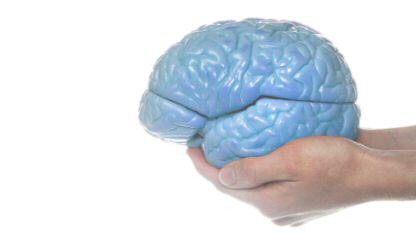
Neuroplasticity is my favorite new buzzword; not so much because of its meaning (which is pretty impressive) but because of the image it invokes: my brain, modeled out of cheap plastic, and distributed via Mattel.
In fact, the Mattel/China toxic paint debacle might explain a lot…. perhaps my neurons have been recalled? I’ll have to check it out. Meanwhile, on with the defining!
Neuroplasticity is the brain’s ability to reorganize itself, generate new cells, new neural pathways, and to change which areas control which functions. It’s become a buzzword for good reason; new understandings of neuroplasticity are turning assumptions about our minds and brains upside down.
One of the basic beliefs about the brain was that once it matured, it was fixed. Neuroplasticity was a function of a developing breain, or so it was assumed. The ability to learn new tasks was believed to be strictly limited, and many of the brains functions (including intelligence, levels of happiness/emotional stability, and mental health were thought largely fixed. Mental decline was considered inevitable with aging, and adult victims of stroke, brain injury and disease were without much hope of improvement.
But modern neuroscience shows that the adult brain remains remarkably flexible. It can reorganize itself after extreme injury and trauma. It can grow. It can form new connections, change wiring, eliminate old wiring.
Perhaps most astounding are discoveries that it adapts not only to external experiences, or to correct injury, but can adapt and change according to our internal thoughts. How we *think*, what we think about, the activities we engage in, the things we value and focus on and practice — they change the physical structure and neural pathways in the brain.
I’m trying to avoid the heavy science here, because I want to get this one point cemented.
Our brains.. my brain, and *your* brain…. are capable of astounding change and growth, for good or ill.
Some of that change is within our ability to control.
It’s worth learning about.
It’s worth learning about, because that process of learning itself changes our brain.
And *that* is neuroplasticity, applied 
_______________________________
MindTWEAK: Turns out, you CAN teach an old dog new tricks!
_______________________________
{ 2 comments }
On Being Fat and Stupid: *Is* There A Link?
Yesterday, I exploded my subconscious assumption that wealth and intelligence were strongly connected (they aren’t). Today, the topic is even more painful; just typing the title of this post made me shudder.
But exploring this second subconscious prejudice of mine (A presumed link between being overweight, and being not-so-bright) didn’t lead me at all where I expected.
When I keyed the search terms into Google, I was confident that I’d find there was no real link between weight and intelligence.
I was wrong. [click to continue...]
{ 3 comments }