Posts tagged as:
Eric Maisel
Dangerous Creativity: Five Points To Remember
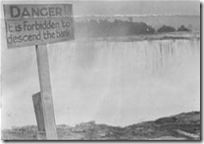 Look for the darkspots: Seek out the shadowed corners of your life, your psyche, your worldview. Poke around in the crawl spaces. What hasn’t been exposed to light? What hasn’t been revealed? What are you or others afraid to look at? Shadows do hide horrors at times, but they also hide forgotten treasures, history, hope and beauty.
Don’t dismiss the difficult: If an idea seems too dangerous or too difficult to approach, don’t automatically turn away. Stop and consider it a while. What makes it difficult? Why do you want to avoid it? Are the reasons valid? Are there ways around the dangers?
Don’t gut it: It’s tempting to slice and dice dangerous ideas, and you can indeed water one down so it is safer, more commercial, more acceptable. Of course it will also be empty, meaningless, and bland. Better to *start* with a safe idea, than to drain the life power out of a dangerous one.
Stay Risk Aware: Once you’ve identified the risks, and decided to go forward anyway, stay aware and alert. Forgetting the dangers means you can be blindsided by them, and stopped dead in your creative tracks. Staying aware also keeps you energized, attentive, focused - and reduces the temptation to water things down. As the project becomes more familiar, it will start to feel more safe.
It isn’t safe. that’s the point! Don’t forget it.
Related:
Dangerous Creativity: Tackling “Too Difficult” Ideas.
{ 0 comments }
Dangerous Creativity: Tackling "Too Difficult" Ideas.
Last night I cracked open another of Eric Maisel’s books (this time, Fearless Creating) and surprise! I related. His books are aimed at artists of all types: writers, painters, dancers, musicians, filmmakers, but his insights into creative psychology is applicable to everyone - everyone creates, at some level.
Randomly, I opened the book to a section about choosing creative projects; specifically those projects we may try to dismiss as “too difficult” to approach.
You know the ones: An idea pops into your head, with a lot of vigor, motion and excitement. It’s raw, its powerful, its energizing, you love it — and then you immediately pull back the reins. It’s too difficult, too dangerous, too something.
“Deep creativity often means dangerous creativity” says Maisel, and in my case he’s certainly right. The more of my emotional blood I spill onto the paper, the more risks I take, the deeper my words and images become. But that doesn’t keep me from dismissing difficult and dangerous projects out of hand.
Maisel asks creatives to stop the dismissing, and look more deeply at the ideas we think are “too difficult”, and examine how we handle them. It may be “too difficult” to do.. but it’s probably not too difficult to think about.
{ 0 comments }
Musing On Making-Meaning: 8 Points To Learn And Remember
Last week, I introduced the topic of “meaningfulness” as it relates to artists and depression.
Today, I want to review and reinforce a few ideas about finding, making, and maintaining meaning, on a personal level. Looking over this list, I’m surprised that I didn’t realize so much of this earlier.
On the general size and shape of meaning:
- Meaning doesn’t come in just the extra grande sized servings; there are also little nibbles of meaning (popcorn purposes?). These bite-sized portions are functional and productive. I don’t have to find a purpose that gives meaning to my entire life…. just a meaning for why I’m doing this altered-book page, or this blog post, this painting, or this load of dishes.
- Meaningfulness doesnt have to be forever. It can be meaning for this afternoon, for a week, for a year. I may find a temporary meaning in discovering meaning. I may find temporary meaning in becoming organized.
- Meaningfulness doesn’t have to be worthy, by anyone else’s standards, or even mine, for that matter. A purpose doesn’t have to be altruistic, it doesn’t have to be lofty or idealistic or “for the common good”. If making a million dollars is meaningful for me… that’s a perfectly decent motivation, inspite of the mutters about “sell out!” that may come.
{ 4 comments }
Meaningless Depression: The Van Gogh Blues
Book Review: The Van Gogh Blues
Vincent Van Gogh is the poster child for the depressed, unstable artist, and a strong argument for the correlation between a troubled soul and brilliant creativity.
I refuse to believe that being creative means I’m doomed to a life of mental disorders. When a recent mood-funk sent me reeling, I set out on a search for information, ran across psychotherapist Eric Maisel’s work — and stumbled into one of those rare aHa! moments.
In The Van Gogh Blues, Maisel’s underlying theme is that creative-types are in the business of making meaning.
It’s what we do. We connect the dots from this to that, and draw lines between apparently random observations, until they mean* something. Then we invest and reveal the meaning to others in tangible forms: dance, music, words, and imagery.
So artists are driven by the need to express meaning - and when we loose that any sense of meaning in a project (or in our lives) we fall into what Maisel calls “a meaning crisis” (which seems to have a lot in common with a crisis of faith) Any number of things can cause a crisis in meaning; a goal that has been met, a change in life circumstance, a negative thought or doubt that springs seemingly out of nowhere and runs amok. But whatever the cause, if we don’t recover or reinvest a sense of meaning into our work and lives, depression, anxiety, addictions and a variety of other ills can take over. Only recovering a new sense of meaning will pull us out of it - at least that’s the theory and goal of Maisel’s “Meaning Therapy” [click to continue...]
{ 5 comments }